




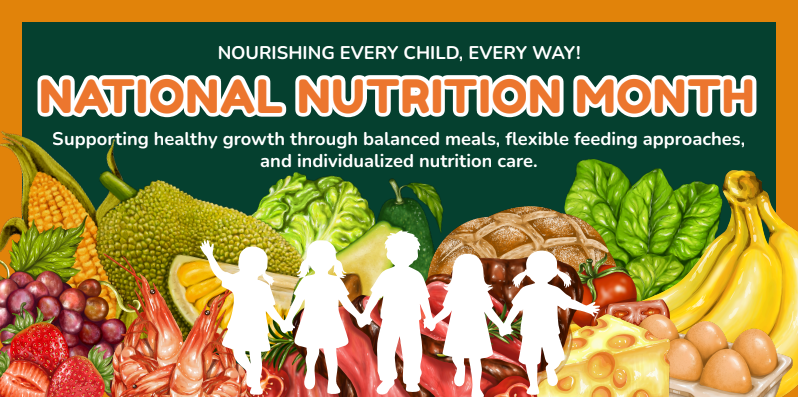
March is National Nutrition Month, a time to celebrate how food supports health, growth, energy and overall well being. In pediatrics, nutrition is never one size fits all. Every child has unique needs, preferences, medical conditions, and feeding challenges, and all children deserve the opportunity to be nourished in a way that helps them thrive.
For some children, that may look like three balanced meals and snacks throughout the day. For others, nutrition may include tube feeding, modified diets, allergy friendly foods, or working through feeding challenges such as ARFID, celiac disease, or food allergies. No matter what the journey looks like, good nutrition can be achievable, flexible, and supportive.
Healthy Nutrition Habits
While every child’s needs are different, there are a few habits that support most children’s nutrition and growth.
One important habit is building more structured meal and snack routines. Predictable mealtimes can help children come to the table hungry, reduce grazing throughout the day, and build consistency for families. Many children do best with three meals and one to three planned snacks spread across the day.
Another helpful strategy is offering protein and fiber regularly. Including a source of protein and fiber at meals can support fullness, energy, blood sugar stability, and growth. Depending on the child, proteins may include foods like yogurt, cheese, eggs, nut or seed butters, meats. Fiber may include foods like fruit, vegetables, beans, or whole grains.
Reducing sugary beverages when possible is also helpful. Drinks such as soda, juice, sweet tea, sports drinks, and flavored beverages can displace more nourishing foods and may contribute to excess added sugar without much nutrition. Water and milk are often good everyday options for most children. For some children, small amounts of juice may still fit, but sugary drinks should not be the main source of hydration.
Simple, consistent habits over time often matter more than perfection.
Nutrition Can Look Different!
A healthy life does not look the same for every child.
Some children rely partially or fully on enteral nutrition to meet their needs. Tube feeding can be an essential, safe, and effective way to support growth, hydration, and medical stability. In some cases, families may work closely with their team to explore blenderized tube feedings when appropriate. These plans should always be individualized and guided by a healthcare professional to ensure they are nutritionally adequate, safe, and appropriate for the child.
Other children may need more selective or restrictive diets. A child with celiac disease must strictly avoid gluten. A child with food allergies may need to eliminate one or more foods. A child with ARFID may have a very limited range of accepted foods and may require a gradual, supportive feeding approach rather than pressure.
These situations can be stressful for families, but it is important to remember that nutrition support is not about making meals perfect. It is about meeting the child where they are, protecting growth and health, and expanding options safely over time when possible.
Options For All
Restaurants and schools are increasingly aware of food allergies and special dietary needs. Stores now carry a wider variety of allergy friendly, gluten free, and specialized nutrition products. Specialized formulas and supplements are also more accessible whenever. These options can be overwhelming; however, families do not have to do it alone.
Registered dietitians and pediatric feeding teams can help families identify foods, formulas, routines, and strategies that fit their child’s developmental and medical needs. Small adjustments can make a big difference in helping children meet nutrition goals while reducing mealtime stress.
This National Nutrition Month, Celebrate Progress
National Nutrition Month is a great reminder that there are many ways to nourish a child well. Whether a child is eating a wide variety of foods, relying on a specialized diet, or receiving tube feeding support, their nutrition journey matters. Aim for nourishment, growth, safety, and a healthier relationship with food and feeding over time.
A pediatric dietitian can help your family navigate feeding concerns, special diets, formula options, tube feeding, and mealtime strategies tailored to your child’s needs.
Written by: Ruby Wrisley, Graduate Student UTK